Showing posts with label JHA Consult. Show all posts

Wednesday, 18 May 2022

ROI (Return on Investment)


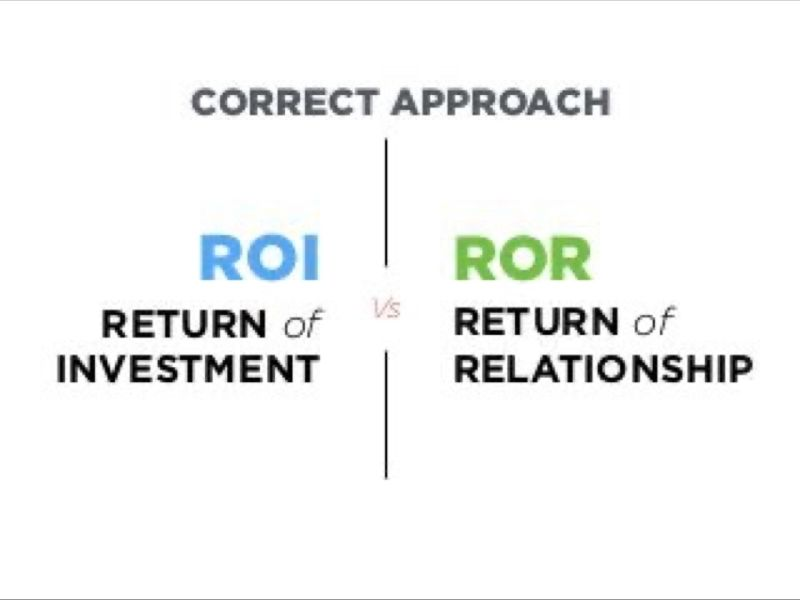
ROR (Return on Relationship) is the value accrued by a person or a brand due to nurturing a relationship. ROI (Return on Investment) is simple dollars and cents. ROR is the value (perceived and real) that will accrue over time through loyalty, recommendations, and sharing.

Networkization of societies has contributed to an exponential increase in the number of relationships, both, face-to-face and virtual. This relationships abundance has made people and businesses think how they can build and maintain value-added relationships? How can they decide the intensity and closeness of relationships? The tendency has led to developments in the concept of Return on Relationships (RoR).

Sunday, 3 October 2021

Pi Day – π Day. Do not overcomplicate!


Pi Day – π Day. Do not overcomplicate!

Pi Day is celebrated on March 14th (3/14) around the world. (Now this is not to be confused with Pie Say which comes more frequently in our household!)  Pi (Greek letter “π”) is the symbol used in mathematics to represent a constant — the ratio of the circumference of a circle to its diameter — which is approximately 3.14159. We all knew that.all know that.(probably).

What some of us may have forgotten is that the other thing about Pi is that it’s an irrational and transcendental number. I’m often irrational but very really transcendental, but in the case of Pi this essentially means that it will continue infinitely without repetition or pattern. No-one yet has found the “end”!!

Now I’m no mathematician, but there is something really quite meaningful about about quite a simple concept (the ratio between a circle and its diameter), being expressed by a never ending or never repeating number.

Your eyes are glazing over, you’re asking yourself what on earth has this got to do with a business blog?

Pi Day

Pie not Pi

Well let me tell you quickly (before you seek out an Apple Pie to munch).

I have always believed in making business simple, and Pi Day is a good reminder.For most practical purposes knowing that the value of Pi is 3.142 is enough. We really don’y need an infinite number of decimal points in the search of some spurious accuracy.

Similarly in business sometime all we need to know is whether the trends are positive or negative; we don’t need to know share points in too fine detail. Another example would be the stampede to demonstrate Marketing ROI to the nth degree. Sure we need to know whether we are getting some sort of return on out investment but it is not an exact science, simply because we are trying to aggregate many individual responses.

So my lesson from Pi Day is to beware over-complicating. Beware too much statistical analysis as a substitute for good old common sense and gut feel. Beware dividing two estimates and evaluating the result to two decimal points.

This is not to negate all use of analysis. But use you common sense and your analysis in equal proportion (or thereabouts) as support for each other. Do not let one subsume the other.

And that is my tip for Pi Day. (and talking of gut fell, I might now try a pie with a e”!!)

Friday, 1 October 2021

Strategic Planning Process

This schematic is an illustration of a typical strategic planning process. It can be tailored to meet specific requirements but demonstrates the thinking models that are used. There is a logical flow that will confirm the vision and create and/or ratify a mission statement for the company (or function) and works through a process to develop a strategic framework and identifies critical success factors for the business. The tactical phase develops actionable plans, again by CSF.
The key aspect of this process is the direct linkage between the strategic elements and the practical activities which results in an integrated plan. This "drill down" process ensures that the plan focused on the elements that provide maximum impact.


Strategic Planning Process – Is yours successful?

 I was asked recently why you need a Strategic plan and how you make a Strategic Planning Process successful. At the time I answered glibly that as I would be involved in the process, I would have to say that I, Myself & Me were the magic ingredients.

More sober reflection leads me to think about the question in a more considered way.Strategic Planning Process

Let me first consider what happens if you do not have a strategic plan. There’s a proverb which is supposed to be Japanese (which probably means the provenance is unknown) that says:

“Vision without action is a daydream. Action without vision is a nightmare”

So you need a vision to know what you are aiming at, together with a plan of action or a strategy to know how you are going to achieve your vision.

So the risks of not having a strategic plan include:

• Not being prepared for changes in the environment that your organization is facing
• functions or individuals in the organization following their own agendas
• inconsistent communication to customers, staff and stakeholders
• inefficiencies and ineffectiveness throughout the operation.

So back to the main question: What do you need to have a successful (or potentially successful) Strategic Planning Process?

The first clue is in the question. To be successful there has to be an ongoing PROCESS. Strategic Planning should not be relegated to an annual “event”. The strategic planning process should be part of the fabric of an organisation, a living document, and very definitely not the contents of one of many dusty ring-binders on a CEO’s top shelf.

The second aspect that is crucial is to understand that while a Strategic Plan must have a long term perspective; it can only be achieved through short term activities. This thought has the added implication of reminding corporate leaders that their lofty objectives need to be broken down into chunks that can be digested and implemented by lesser mortals.

My third area is the Environment.  When creating a strategic plan you need to examine the external environment and try to foresee the impact that this environment could have on your company over the next few years. Different aspects of the environment will have more or less impact depending on your business arena. The areas that are commonly considered include, political, regulatory, economic, social, green environment and technological.

As important as these macro issues are, you probably need to give even more attention to your competitors, customers, consumers, suppliers and vendors. You should know as much about all of these participants in your market place (or components on your value chain) as you do about your own organisation.

My fourth area would focus on your own company capabilities and operating culture. If your strategic planning process is going to result in an effective strategy, you must understand and acknowledge your company’s capabilities in all areas.

This is a tricky area because many of us wear the so-called rose coloured glasses where everything looks slightly better than it is. Let me digress for a minute to tell you a real story. I met with a CEO of a packaged goods business and asked him what the three key capabilities his business had, which positively differentiated them from their competition. Among the areas he mentioned was their speed of decision making, their nimbleness in taking advantage of a fast evolving market, their entrepreneurialism. All good stuff and really all linked. I subsequently talked about these areas to a range of middle managers in the organisation. They were surprised to say the least. Their view was that the decision making process was laboured and bureaucratic resulting in bottlenecks and delays in effecting key decisions.

Different descriptions of the same business. Surely one must be wrong?

Further investigation demonstrated that each party was right from their own perspective. Once decisions reached the CEO and his senior management team, they were incisive and quick. What was not fully appreciated was that department heads were sitting on decisions, tweaking areas, demanding more information, before the proposals even reached the CEO.

Anyway enough said….. You must understand your real capabilities not the ones you would like to have!

The fifth aspect you need to embark on a sound Strategic Planning Process is a sense of direction coming from the top. A common focus provides direction. A short, simple, inspiring vision created by the leader establishes the stretch for the organization in the direction of where it wants to go.

The last area takes me back to that Japanese proverb. Remember the bit that said “Vision without action is a daydream”? You need to bear that in mind when you sort out the participants for your Strategic Planning Process.

Participation in the strategic planning process is key to the plan being successfully translated into action. Everyone in the organization should, at some point, be involved in the strategic plan. People tend to own what they help create. It also works to create a common culture throughout the organization and reinforces the need to get behind the organization’s future direction.

So that’s my six core components for a strategic planning process. There are others to be sure, but start with these and you will have a great process that will result in a clear single-minded direction for your business, a business that understands itself and its environment and a business which has the internal commitment to turn great words into successful actions.

In the words of another Japanese proverb,  “Nito wo ou mono wa itto wo mo ezu”

And if your Japanese is a little shaky “One who chases after two hares won’t catch even one.”

If you’re interested I can talk more about strategy itself, rather than the prerequisites for a strategic planning process….let me know.


Social media marketing has replaced marketing?


“Being a hard nose marketer does not work any more. Social media marketing has replaced marketing”

I saw this quote a few days ago. Now I’m known (by some) for my diplomacy but really this is nonsense!

What is this fixation that Social Media Marketing is the be-all and end-all of marketing? Its this sort of sloppy thinking that has led to the the denigration of marketing from a core strategic function to merely a peripheral communications role.

Social MediaSure Social Media is an important communication medium (one of many), but Marketing should be about so much more than communication!.

Marketing is a broad-based commercial function that helps companies profitably target their resources to meet the specific needs of targeted consumers.

Unilever has a nice visual which demonstrates a little what Marketing really entails. So much more than Social Media!

I am a proponent and practitioner of Social Media. I understand the value of one-to-one contact. I appreciate the power that Social Media has in many fields from political regime change all the way down to brand choice.

But, and this is a big “but” I cannot fathom why Social Media has become Marketing’s silver bullet; the answer to all our woes; the bandwagon on which we all jump.

Social Media is nothing more than another communication channel. You still need to formalise overall objectives and determine a marketing strategy. You still need to determine the role Social Media is going to play in that strategy. You need to reassure yourself that your target can be reached iby this channel. I could go on, but it is just like any other communication tool!!

My bottom line? Social Media is a developing tool that is and will continue to be a powerful communication channel. But lets not get Social Media confused with Marketing! Social Media is part of Marketing – its no more complicated than that!


Organisational Culture: Measuring Perceptions

 Understanding Organisational Culture and measuring its perception is a vital skill within a company. If Employee Perception equals their reality, shouldn’t you check it out?


Jeff Thomson recently summed up organisational culture as follows: “So in a nutshell, this is the story. Success creates habits, which become organisational culture, which fixes those habits even when the world changes and they no longer work. Which results in failure”

Organisational Culture

False Perceptions?

A CEO could see the organisational culture of a business as entrepreneurial and agile, while a middle manager could see the same business as bureaucratic and slow. An HR person could pride himself on great internal communication, while a salesman on the road might wonder what is going on back in the office.

All these perceptions are real to the beholder. To understand the differences is the first step to actually getting everyone on the same page, rather than just imagining they are.

Even if everybody on your company shares the same objective, (and believe me that’s an enormous “if”!), then their route to meet the “agreed” objective will be different because their perception of the start point is different.

Let me give you a real example. A CEO believed that his only real issue in the business was “speed to market”. He geared up systems and processes to streamline everything, but still the company was not gaining any competitive advantage. We looked a little deeper and found that his views were underpinned by the perception that the corporate strategy was understood by all. After all there had been an engagement process to solicit everyone’s views. The CEO’s perception was clear, but he had not given much thought to testing or measuring perception of others.

We looked at a number of different perceptions of facets of organisational culture in the company. When we checked views on the strategic leadership of the company, the majority of the CEOs direct reports were positive, while more junior managers were skeptical to say the least. As a result of this skepticism, there was no real urgency behind implementation. No-one really believed there was any direction.

In this case the solution was easy; all that was required was better communication between senior and middle management.Without measuring perception at different levels we would not have found out this root cause to slow speed to market.

Don’t you owe it to yourself and to your company to find out whether your perceptions of your company’s organisational culture are shared by others?

Taking ownership is about taking initiative.


Taking ownership is about taking initiative. We take ownership when we believe that taking action is not someone else’s responsibility. You, as an individual, are accountable for the quality and timeliness of an outcome, even when you’re working with others. You care about the outcome the same way you would care as an owner of the organization. It doesn’t mean you have an obligation to own the project. It doesn’t mean you shouldn’t involve others. It does mean you have an obligation to the results of the organization and that you have an obligation to act on items that impact those results.


Maybe you have a great idea for how to save the organization money, but it’s outside the scope of your role. Or perhaps it would take more time than you have. Or perhaps you don’t have the resources needed to complete the task or the fix resides elsewhere in the organization. In these situations, taking ownership means bringing your idea forward to someone who does have the time or resources to get it done.


2025 is around the corner. Are you ready?


Our award-winning answer is GreenArrow™.

Using the latest in polymer and processing technologies, the GreenArrow™ platform of sustainable films has been designed to power a new generation of sustainable, flexible packaging without the trade-off in performance.

  • > Reduce your carbon footprint and greenhouse gas emissions
  • > Use post-consumer recycled (PCR) resins
  • > Convert your multi-material, unrecyclable packaging into recyclable store-drop off approved formats


A Better Way to help the environment.

We are believers in the power of collaboration so as a user of GreenArrow™, you not only get a great film, you get a partner. We work with you step-by-step to develop a fully sustainable package from print, to lamination, to touching.

                                              Get In Touch                                              

Sustainability and Recyclable Films

 Flexible packaging offers significant value and sustainability benefits to product manufacturers, retailers, and consumers. Although there are many packaging options available to meet various packaging demands, flexible packaging offers considerable advantages, with fewer trade-offs. Flexible packaging reduces waste, energy use, and greenhouse gas emissions. Additionally, flexible packaging provides many consumer conveniences including extended shelf life, easy storage, microwaveability, and resealability.

For a snap-shot of the advantages of flexible packaging over alternative packaging types, please refer to the graphics below from the Flexible Packaging Association.


Strive for Sustainability

Sustainability is more than an idea for Charter Next Generation. It is our responsibility.


Proactive.

Our mission to preserve the world in which we all live demands that we proactively implement sustainability initiatives in our facilities, processes, products, materials, transportation, and recycling efforts.


Saturday, 4 September 2021

Difference Between CTC And In-han…


Difference Between CTC And In-hand SalaryHave you ever noticed that the CTC that was offered to you during the hiring process and the amount you are getting in-hand has a considerable difference? Before joining any organisation, newcomers generally have a misconception that the CTC that is offered and the in-hand salary will be the same. But in reality, this is not true. There is a difference between the CTC and the take-home salary you receive at the end of every month.

The various deductions from the gross salary results in a considerable difference between the initially offered CTC and the actual in-hand salary. The CTC to take-home salary can be calculated using the take-home salary calculator. Hence, it is important to understand your salary structure and the various terminologies used.


CTC

CTC or cost to the company is the amount of money spent by the employer to hire a new employee. It comprises of several components such as HRA, medical insurance, provident fund, etc. which is added to the basic pay. The allowances may include meal coupons, cab service, subsidised loans, etc. All these elements combined form the entire cost to the company. Basically, CTC is the cost spent by the employer spent in hiring and sustaining the employee in the organization.

Difference Between CTC And In-hand Salary

GROSS SALARY

Gross salary is the amount after the EPF and gratuity are subtracted from the CTC. Basically, the remuneration paid before deducting the income tax, professional tax, and other deductions. It is inclusive of bonuses, overtime pay, paid holiday amount, and other differentials.

GRATUITY

This is the part of the employee's salary that is paid by the company as a token of appreciation for the services of the company offered during the tenure of employment. It is mainly defined as the benefit provided to the employee at the time of their retirement. Under the Income Tax Act, an employee is eligible to receive the gratuity amount after the completion of 5 or more years of full-time employment at an organisation.

NET SALARY OR IN-HAND SALARY

Take-home salary or the In-hand salary is the amount which the employee receives after the tax, and other deductions are carried over. The difference between gross and net salary is that the salary that includes the income tax, professional tax, and other company policy deductions subtracted from the gross salary.

In-hand Salary = Gross Salary - Income Tax -Professional Tax

It is important to know that the CTC offered will be different from what you actually receive in-hand at the end of the month. The difference between CTC and in-hand salary are the various deductions that occur at the time of payout. The take-home salary can be increased by proper tax planning and avoiding any income tax deductions.

For instance, if the employee invests INR 1.5 lakh in tax saving entities under Section 80C such as mutual funds, PPF, etc. he/she can save on income tax. This will result in reducing the total deductions from the gross salary, thereby increasing the in-hand salary.


Difference Between Take Home, Net, Gross Salary and CTC

What is Salary?

An employee’s salary is determined by several parameters like his/her profession, skillsets and years of experience, location of profession, salary structure, tax bracket that they belong to, etc. An employee’s monthly salary comprises of several components – Cost To Company, Gross Salary and Take Home Salary. It is often confusing for us to differentiate among them.

Let’s take a close look at each of them - Cost To Company, Gross Salary and Take Home Salary.

Cost To Company (CTC)

CTC is nothing but the total package of the salary of an employee. It shows the total expenses that an employer is willing to spend for an employee during the financial year.

Components of CTC:

The below illustration will give you a clear perspective of the various components of Cost To Company:

DIRECT BENEFITSINDIRECT BENEFITSSAVINGS CONTRIBUTIONS
Basic SalaryInterest Free LoansSuper Annuation Benefit
Medical AllowanceSubsidized Meals & Food CouponsEmployer Provident Fund (EPF)
Conveyance Allowance (CA)Company Leased AccommodationGratuity
House Rent Allowance (HRA)Life & Medical Insurance premiums paid by employers
Dearness Allowance (DA)Income Tax Savings
Leave Travel Allowance (LTA)Office Space Rent
Vehicle/Fuel Allowance
Phone Allowance
Incentives or Bonuses
Special Allowance & City Compensatory Allowance

As evident from the above, Cost To Company is the summation of Direct Benefits, Indirect Benefits and Savings Contributions. Direct Benefits refers to the amount paid to an employee annually, while Indirect Benefits implies to the amount the employer pays on behalf of the employee on an annual basis. Saving Contributions are the schemes in which employee or employer or both invest for making a savings for the employee.

Let’s take a look at each of these components in detail:

  • Basic Salary: This is a constant component in your salary, and never varies. This is also referred to as the in-hand salary.
  • Allowances: Further, there are a range of allowances offered over the basic salary to enable you to meet your basic daily expenses like travel to and from work, place of stay, etc. These are:
  • House Rent Allowance (HRA): HRA is the component offered to the employees by the employer. Employees who contribute towards the expenses for their accommodation are eligible for tax benefits on the entire amount paid in a financial year.
  • Leave Travel Allowance (LTA): This allowance offers tax exemptions on annual travel expenditures within India. These expenses include travel by train, flight, etc. However, this does not include other expenses during travel like food, drinks, etc.
  • Dearness Allowance (DA): This is the adjustment for the cost of living adjustment to overcome the inflationary effects that often keep increasing every year.
  • Phone Allowance: As the name suggests, this allowance is offered on an employee’s phone bill up to a certain amount every year, as specified by the employer.
  • Vehicle/fuel allowance: Again, as evident from the name, this allowance pertains to expenditures towards the purchase of fuel for employee’s vehicle in a financial year.

Example of CTC:

Let’s say Mr. Sharma’s CTC is Rs. 4,00,026. The breakdown of his CTC is as below:

Basic Salary: Rs. 1,92,600

House Rent Allowance (HRA): Rs. 1,06,300

Conveyance Allowance (CA): Rs. 19,200

Medical Allowance: Rs. 15,000

Employee Provident Fund (EPF): Rs. 21,600

Gratuity: Rs. 18,326

Special Allowance: Rs. 27,000

Gross Salary

Gross Salary includes Gratuity, Employee Provident Fund (EPF) and Super Annuation Benefit whichever is applicable. These, referred to as Savings Contributions, are offered by an employer to their respective employees. The contributions towards these are added to the Cost to Company (CTC) for the employee. These amounts are paid before the taxes are deducted and include bonuses, holiday pay, over-time pay, and other differentials.

Employee Provident Fund (EPF): This is an employee-benefit scheme under the authority of the Ministry of Labour, India. The Employee Provident Fund Organisation (EPFO) presides over decisions related to EPF, insurance schemes, pension, etc. The employer contributes a minimum of 12% of the employee’s monthly income towards his/her EPF account.

Employees are given the benefit to withdraw the entire amount accumulated in his/her PF account during the time of his/her retirement or earliest at the age of 55 years.

Under this scheme, employees also have the advantage of withdrawing the amount during certain specific situations:

  • Sudden termination of services
  • Retirement owing to permanent disability
  • Migration due to employment opportunities abroad

Gratuity: This is a contribution made by the employer towards an employee’s salary as a sign of his/her gratitude towards the services offered by the employee. This is paid at the time of his/her retirement/superannuation, retrenchment, migration due to better employment opportunities or voluntary retirement. However, an employee has to complete at least 5 years of full-time employment with the employer for his/her gratuity to attract tax benefits under Section 10(10) of the Income Tax Act, 1961. Gratuity is a percentage of an employee’s basic salary, generally 4.81%.


DISCLAIMER

The information contained herein is generic in nature and is meant for educational purposes only. Nothing here is to be construed as an investment or financial or taxation advice nor to be considered as an invitation or solicitation or advertisement for any financial product. Readers are advised to exercise discretion and should seek independent professional advice prior to making any investment decision in relation to any financial product. Jhasolutions is not liable for any decision arising out of the use of this information.