


Subscribe To

 Posts
All Comments
Showing posts with label Leadership. Show all posts
Showing posts with label Leadership. Show all posts
Monday, 3 October 2022

Wednesday, 18 May 2022
ROI (Return on Investment)
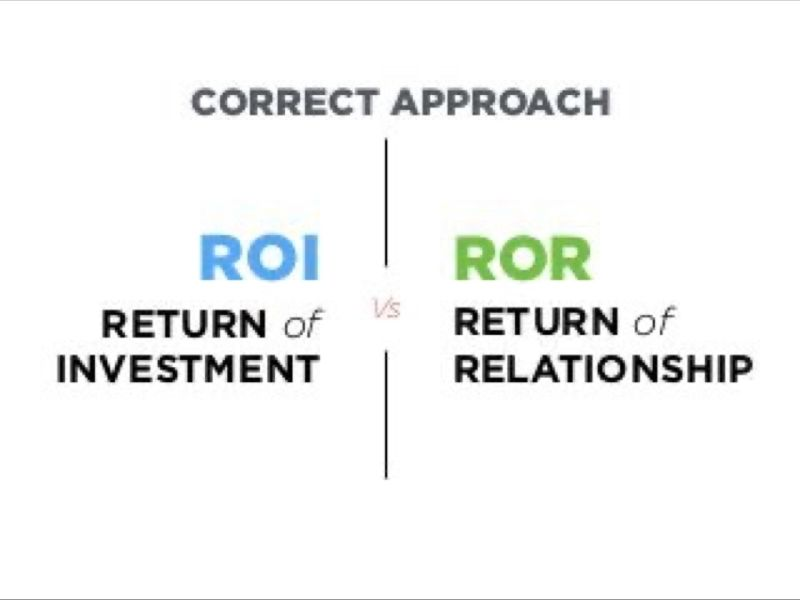
Networkization of societies has contributed to an exponential increase in the number of relationships, both, face-to-face and virtual. This relationships abundance has made people and businesses think how they can build and maintain value-added relationships? How can they decide the intensity and closeness of relationships? The tendency has led to developments in the concept of Return on Relationships (RoR).
Wednesday, 4 May 2022
talent v/s Skill
By the term talent, we mean a special ability to do something possessed by a person naturally. It is something, which you do the best without putting extra efforts into it.

Skills refer to an ability or an expertise in performing a task, obtained by a person through systematic learning, practice or experience. It is the outcome of continuous efforts and improvements made to gain proficiency.
There are a few differences between talent and skill which is explained in the given below points:
▪️The term talent refers to an inborn and the special ability of a person to do something. A skill is an expertise, which is acquired by the person by learning.
▪️Talent is God gifted ability, whereas Skill is an ability in which you put your time and efforts to develop.
▪️Talent is often possessed by a limited number of people. On the other hand, any person can learn a particular skill, if he has the capacity, capability, and willingness.
▪️Talent is hidden, that is why it needs recognition. As opposed to Skill, requires development, which can only be possible through practice.
▪️Coaching may prove helpful in getting the best out of someone i.e. talent. Conversely, training is necessary for acquiring a skill, to put your best into something useful.
Friday, 1 October 2021
Strategic Planning Process

This schematic is an illustration of a typical strategic planning process. It can be tailored to meet specific requirements but demonstrates the thinking models that are used. There is a logical flow that will confirm the vision and create and/or ratify a mission statement for the company (or function) and works through a process to develop a strategic framework and identifies critical success factors for the business. The tactical phase develops actionable plans, again by CSF.
The key aspect of this process is the direct linkage between the strategic elements and the practical activities which results in an integrated plan. This "drill down" process ensures that the plan focused on the elements that provide maximum impact.
Organisational Culture: Measuring Perceptions
Understanding Organisational Culture and measuring its perception is a vital skill within a company. If Employee Perception equals their reality, shouldn’t you check it out?
Jeff Thomson recently summed up organisational culture as follows: “So in a nutshell, this is the story. Success creates habits, which become organisational culture, which fixes those habits even when the world changes and they no longer work. Which results in failure”

False Perceptions?
A CEO could see the organisational culture of a business as entrepreneurial and agile, while a middle manager could see the same business as bureaucratic and slow. An HR person could pride himself on great internal communication, while a salesman on the road might wonder what is going on back in the office.
All these perceptions are real to the beholder. To understand the differences is the first step to actually getting everyone on the same page, rather than just imagining they are.
Even if everybody on your company shares the same objective, (and believe me that’s an enormous “if”!), then their route to meet the “agreed” objective will be different because their perception of the start point is different.
Let me give you a real example. A CEO believed that his only real issue in the business was “speed to market”. He geared up systems and processes to streamline everything, but still the company was not gaining any competitive advantage. We looked a little deeper and found that his views were underpinned by the perception that the corporate strategy was understood by all. After all there had been an engagement process to solicit everyone’s views. The CEO’s perception was clear, but he had not given much thought to testing or measuring perception of others.
We looked at a number of different perceptions of facets of organisational culture in the company. When we checked views on the strategic leadership of the company, the majority of the CEOs direct reports were positive, while more junior managers were skeptical to say the least. As a result of this skepticism, there was no real urgency behind implementation. No-one really believed there was any direction.
In this case the solution was easy; all that was required was better communication between senior and middle management.Without measuring perception at different levels we would not have found out this root cause to slow speed to market.
Don’t you owe it to yourself and to your company to find out whether your perceptions of your company’s organisational culture are shared by others?
Subscribe to:
Posts (Atom)